
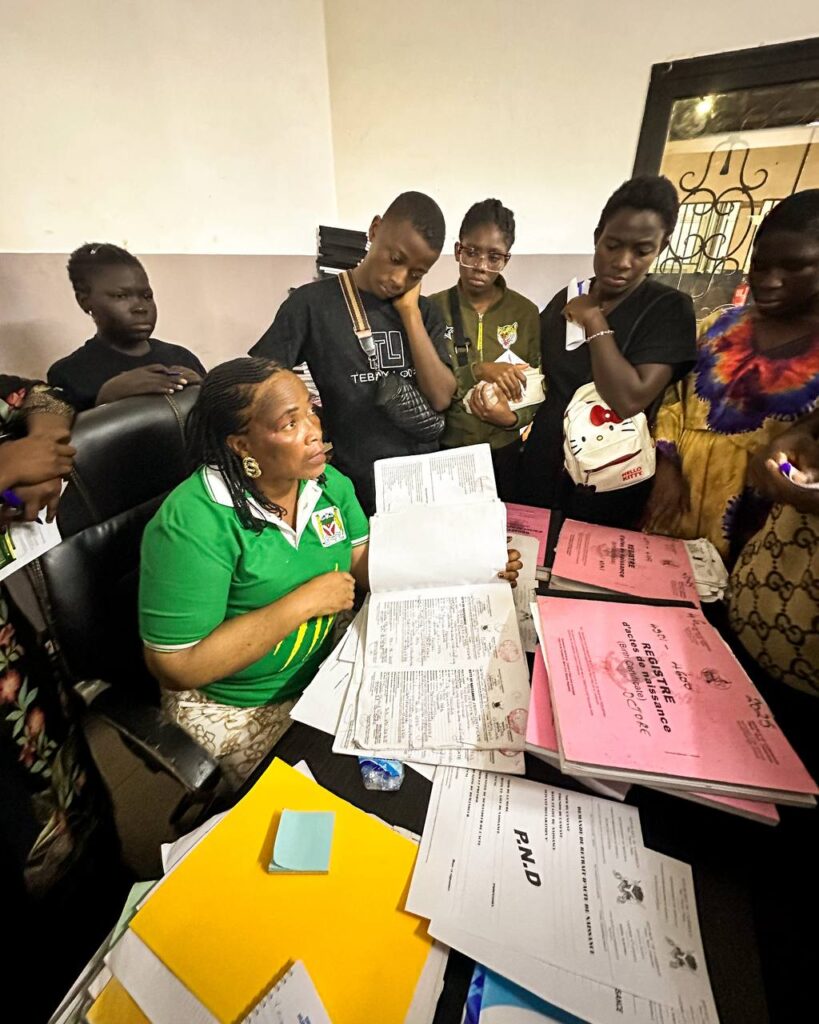
A group of children from several orphanages across Yaoundé received a hands-on introduction to local governance.
This was during a field visit to the Yaoundé VI Council organized under a community initiative led by youth leader Cynthia Ebot Takang.
The field visit was part of her “Pass-It-On” activity under the Rebuilding Peace Through Actions With Inclusive Reach, REPAIR Cohort 11 training program.
The visit, which began at approximately 11 a.m., brought together children from four orphanages across the city; St. Thérèse Orphanage in Obili, Christian International Orphanage, Acacia, St. Rita Orphanage, and Orphelinat Divin in Mendong. They converged at the council premises for a guided institutional tour led by council officials.
Upon arrival, the children were welcomed by the Head of the Social Services Bureau, setting the tone for a day focused on civic awareness, participation, and inclusion.
The first stop of the visit was the Civil Status and Demography Office, where Head of Service Nseke Willy introduced participants to the structure and functions of the department.
The children were later guided through several council units, including the demography service, where Head of Service Mengo Evouna Epse Mbahen Marie Laure explained the role of demographic statistics in local governance and how population data supports planning and decision-making within the municipality.
The visit continued at the civil status unit, where Madam Atemengue Edwige presented the three major civil documents issued by the council: birth, marriage, and death certificates.
Stressing the importance of birth registration, she described the birth certificate as “the foundation of every Cameroonian citizen’s identity,” particularly for vulnerable children.
Her session sparked strong engagement among participants, who asked practical questions about registration procedures, missing documents, and obtaining birth certificates in complex family situations.
Some participants, including young mothers, sought clarification on how to register children when fathers were absent. Council officials explained that mothers could proceed with registration even without the father’s information and advised participants on procedures for recovering missing documents or initiating late birth registration processes through the courts.
One of the defining moments of the visit came when a participant from St. Rita Orphanage asked for clarification on the acronym “CNI”, Carte Nationale d’Identité, translated as National Identity Card in English. The interaction highlighted the civic knowledge gap the initiative aimed to address and reinforced the importance of civic education among underserved youths.
Following the guided tour, participants reconvened with council officials for an interactive quiz session designed to assess their understanding of the lessons shared during the visit. Officials also answered additional questions raised by the children.
The group later moved to the council’s main hall, the Salle des Actes, where participants shared reflections on the experience and discussed issues affecting their communities and orphanages.
The most active participants received incentives, including t-shirts, while others took part in short quizzes on civic knowledge and national institutions. Some participants also pledged to create clubs within their orphanages to take part in sanitation and clean-up campaigns organized by the council.
The final segment of the visit took place at the office of the Head of Culture and Education, Beyala Mvondo Louis, who presented the role of the social services desk and engaged participants on the council’s social support initiatives.
Discussions during this session extended beyond the educational visit itself, as representatives from the orphanages exchanged with council officials on possible areas of collaboration. One proposal focused on support for an upcoming inter-orphanage competition scheduled for its fifth edition this year, organized by a caretaker from Orphelinat Divin.
Despite heavy rainfall during the day, the children remained actively engaged throughout the visit, demonstrating enthusiasm and curiosity.
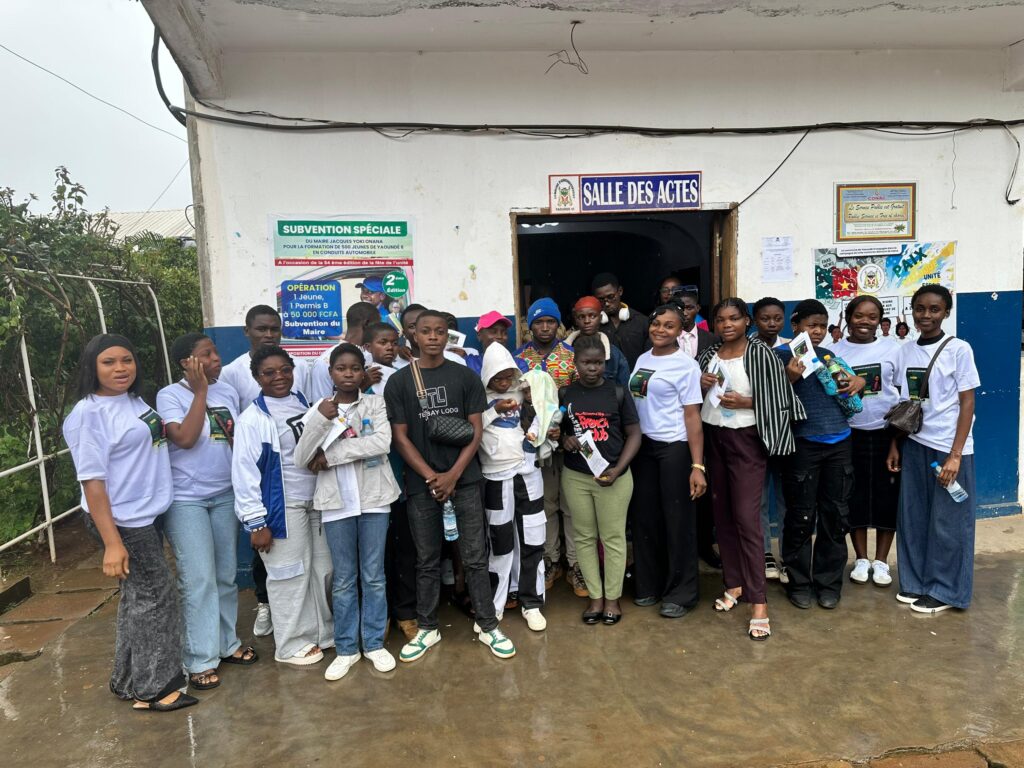
The initiative was organized by Cynthia Ebot Takang. under the REPAIR training program implemented by the Network for Solidarity, Empowerment and Transformation for All (NEWSETA)
The program requires participants to implement a community-based “Pass-It-On” initiative aimed at extending the benefits of the training to at least 30 youths within their communities.
Cohort 11 of the program focuses on the theme “Youth Participation in Local Governance.”
“These children do not always have the same opportunities as others, and it is important that they feel included in conversations about their rights and their place in society,” Ebot said.
She explained that the initiative was designed to bridge that gap by providing practical exposure to civic institutions and administrative processes.
Through the visit, participants not only discovered how their local council functions but also gained a deeper understanding of identity documents, citizenship, civic responsibility, and community participation, marking a significant step toward fostering informed and engaged future generations.