
A recent Erasmus+ staff mobility exchange between the University of Buea (UB) and Aarhus University in Denmark is opening fresh conversations around the future of journalism education, academic collaboration, and media innovation in Cameroon.
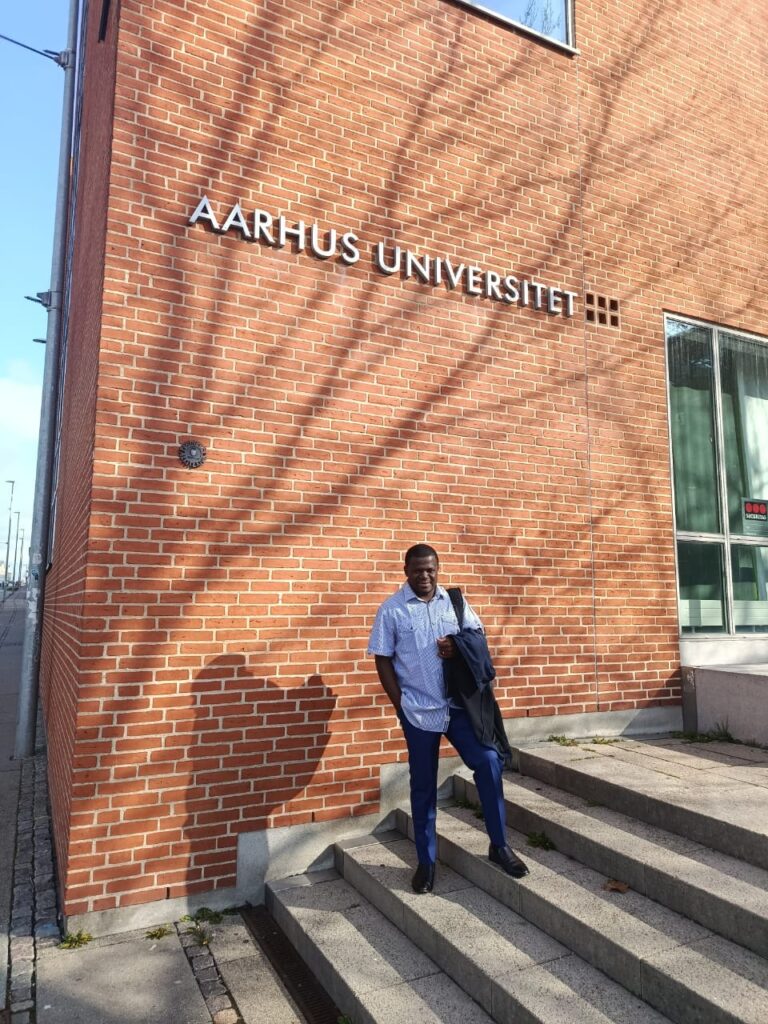
From April 13 to May 5, 2026, Dr. Nseme Stephen Ndode, lecturer in the Department of Journalism and Mass Communication at the University of Buea, participated in an academic exchange programme hosted by Aarhus University under an existing Memorandum of Understanding between both institutions. The mobility programme, coordinated by Associate Professor Teke Ngomba of the Department of Media and Journalism Studies, focused on staff development, journalism pedagogy, research collaboration, and institutional learning.
During the exchange, Dr. Ndode participated in workshops and seminars covering themes such as cross-border data journalism, digital history, platform data, constructive journalism, and academic research practices. He also presented a paper on “Online Media Consumption Habits and Democratic Futures of Young Cameroonians,” sharing Cameroonian perspectives and integrating them into wider conversations around media, technology, and democracy.
The exchange also created moments of symbolic academic collaboration. Dr. Ndode presented Aarhus University’s Department of Media and Journalism Studies with two Cameroonian publications; Media and Governments at War and Media Coverage of Conflicts in Africa. In return, the department gifted him books on sports media and mediatisation.
Student media sustainability
In addition to workshops, the mobility programme provided a firsthand look into how journalism education and student media are structured in Denmark, providing a learning curve for the University of Buea. One of the most notable visits was to Omnibus, Aarhus University’s campus newspaper. There, Dr. Ndode met Editor-in-Chief Marie Groth Andersen and journalist Asbjørn With, who shared insights into the newspaper’s editorial structure and independence model.
According to discussions during the visit, Omnibus transitioned online in 2021. Prior to this, the newspaper attained a print circulation of 15,000 copies distributed freely to students and staff through university funding. This experience, Dr. Ndode noted, sharply contrasts with the realities of many student publications in Cameroon, where campus newspapers often struggle with limited funding, lower circulation, and sustainability concerns. In the case of the University of Buea, students involved with campus publications often participate directly in the marketing and circulation process to sustain production.
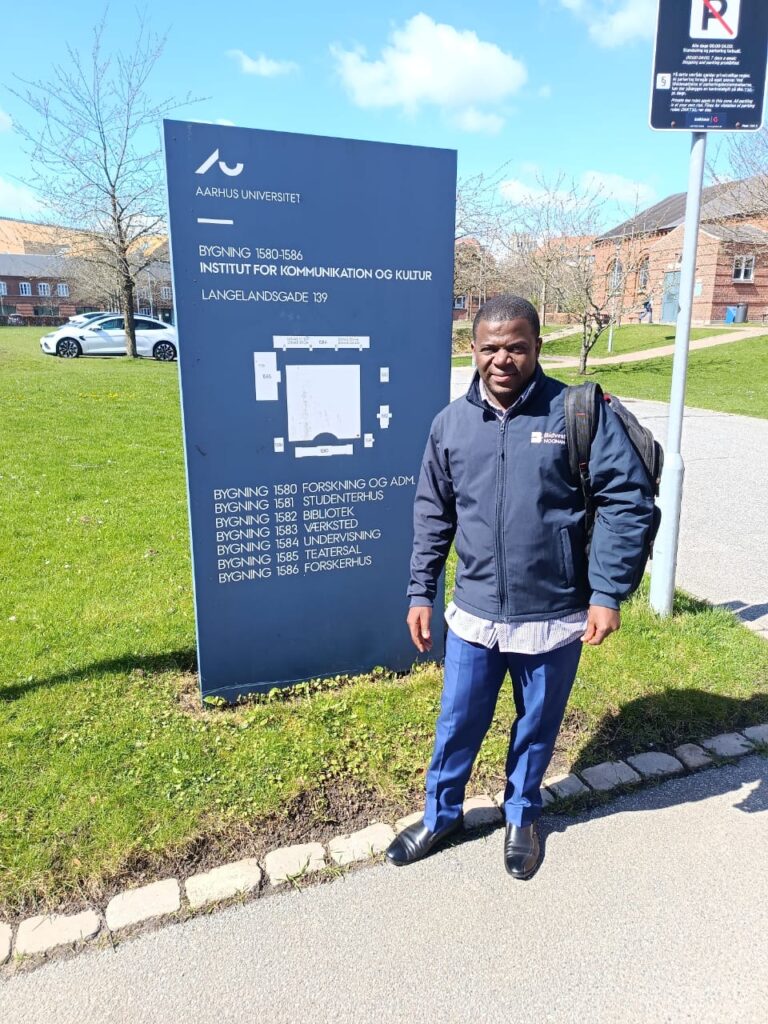
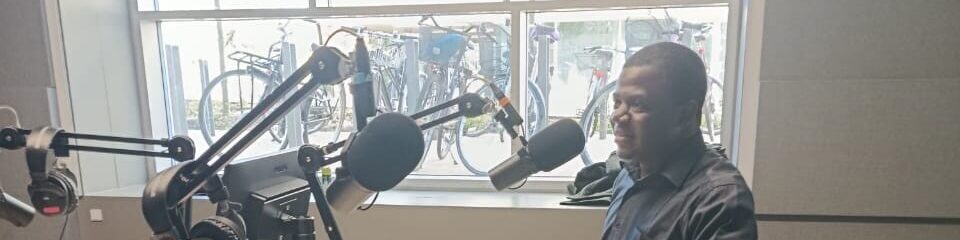
The exchange further exposed Dr. Ndode to practical newsroom infrastructures at the Danish School of Media and Journalism (DMJX), where he toured radio, television, newspaper, and photojournalism laboratories designed to simulate professional media environments.
As journalism globally confronts the rise of artificial intelligence, misinformation, shifting audience behaviour, and declining trust in news institutions, the experiences gathered during the mobility, he revealed, proved useful for his work in journalism training in Cameroon.
Another aspect of the visit focused on innovation and entrepreneurship within higher education. Dr. Ndode was introduced to the idea of “The Kitchen,” an Aarhus University initiative that supports entrepreneurial projects among students and staff, and toured the INCUBA innovation hub, where businesses and academia collaborate within the university ecosystem.
The experience reinforced ongoing discussions at the University of Buea around modern business infrastructure and entrepreneurship support for students, including the university’s proposed “New Shops Project.”
New pathways for journalism training in Cameroon
Beyond institutional lessons, the exchange also highlighted opportunities for deeper collaboration between the two universities in areas such as journalism research, constructive journalism, media training, and academic exchanges. Dr. Ndode noted that one of the most reflective moments of the programme came during his visit to the Constructive Institute, an organisation based at Aarhus University that focuses on transforming global news culture to foster healthier democracies. There, discussions centred on the impact of negative news reporting and the role of constructive journalism in rebuilding audience trust.
The ideas, he noted, strongly resonate with broader debates within African media spaces, where concerns around sensationalism, audience fatigue, and public distrust continue to shape conversations about the future of journalism.
It is worth noting that during his stay, Dr. Ndode completed and received feedback on the first draft of his forthcoming book titled Journalism Education in Cameroon, supported by access to Aarhus University’s library and research facilities. He also visited key cultural and academic sites in Denmark, including Den Gamle By, Dokk1 Public Library, the Natural History Museum, the Science Museum, and Aarhus Cathedral, experiences he described as enriching both academically and culturally.
As universities across Africa increasingly seek global partnerships to strengthen teaching, research, and innovation, the Erasmus+ exchange between UB and Aarhus University points to the growing importance of international academic cooperation in shaping the future of journalism education on the continent.
Great works Dr. Ndode
Hope your exploits in these varied areas of the practice will be valuable to the university community of Buea. Media Sustainability is a huge area of concern
Jude MBAKU
great article and hope this program grows to fruition between the two universities for academic plus staff sustainability