
Fighting rape and gender-based violence no longer begins only in courtrooms, classrooms or community halls. Increasingly, it starts with a well-crafted social media post, an ethical photograph, a compelling graphic or a powerful digital story.
That shift was at the heart of the Harnessing Innovation & Digital Power to Empower Rape Survivors and Strengthen Communities (H.I.P.E.R.S.) project, an initiative by Safe Haven Foundation that trained a new generation of digital advocates to use technology responsibly in the fight against rape and gender-based violence (GBV).
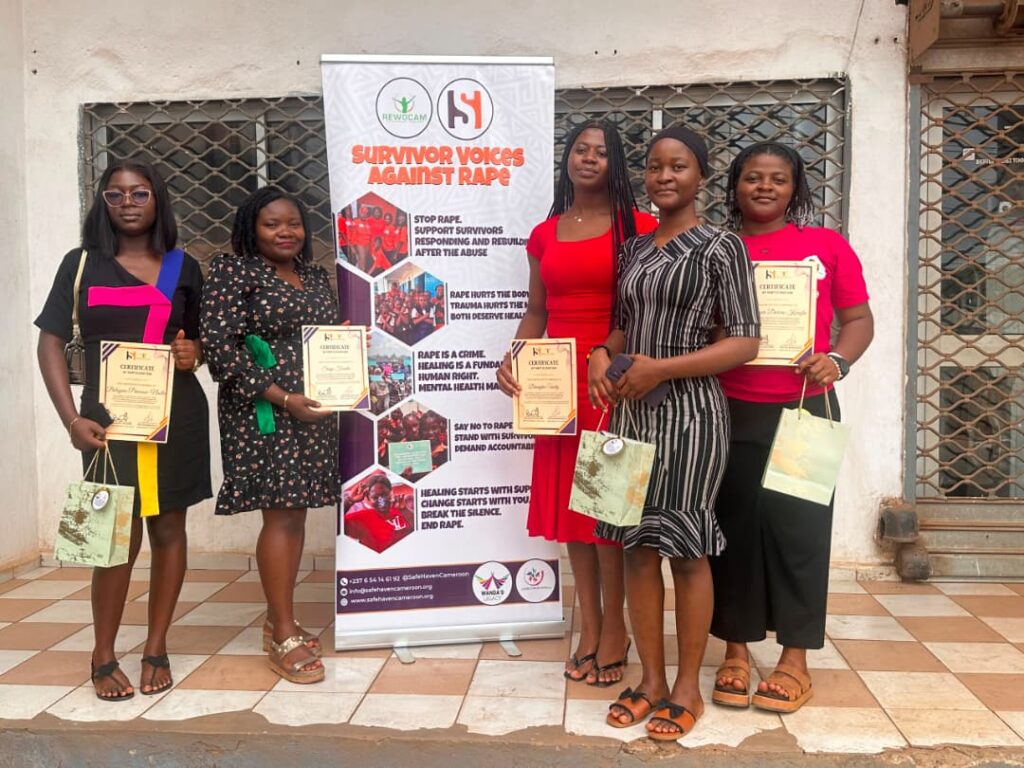
After weeks of online learning and an intensive Digital Advocacy and Storytelling Bootcamp, 15 young advocates emerged equipped with practical skills to educate communities, challenge harmful narratives and amplify survivor-centred voices.
For the organisers, the project was never about producing social media influencers. It was about nurturing changemakers.
“The H.I.P.E.R.S. project was designed to strengthen community awareness on rape prevention, empower survivors and young girls with digital advocacy skills, and promote safer, more supportive communities through innovation and technology,” said Emilien Bongdzeem D., Founder and Executive Director of Safe Haven Foundation.
She explained that the initiative blended digital empowerment with community engagement, enabling participants to use storytelling and technology as tools for prevention while promoting responsible online advocacy.
Learning beyond the screen
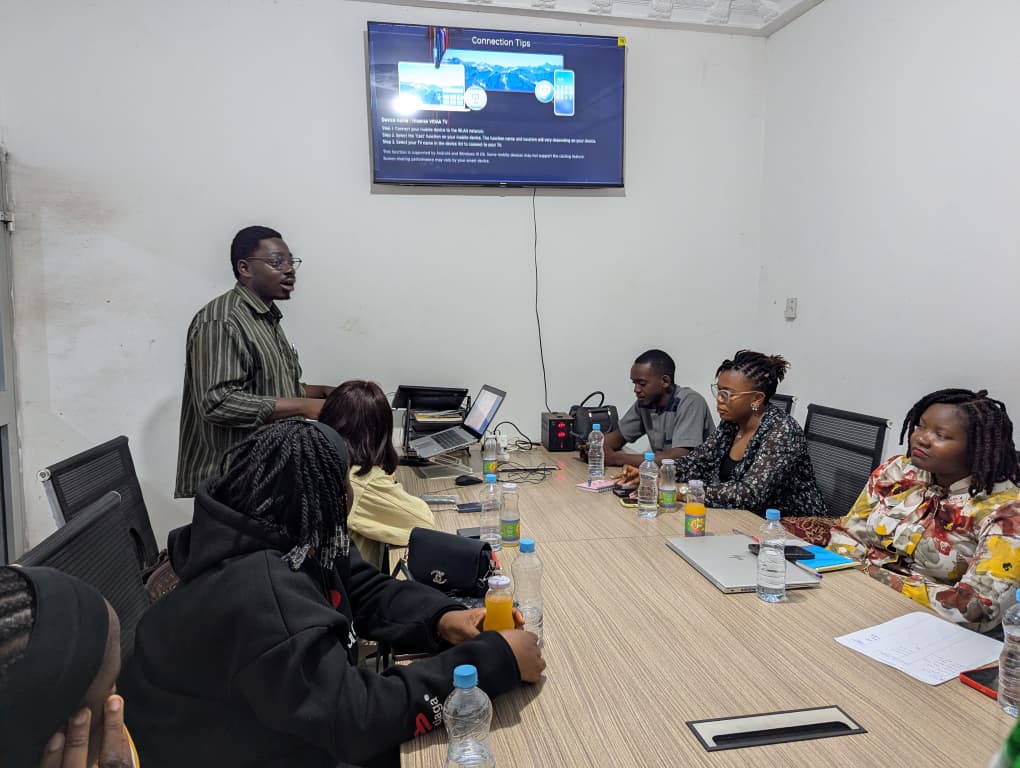
The programme began with a series of virtual sessions on digital advocacy, storytelling and content creation before culminating in a hands-on bootcamp where participants translated theory into practice.
The transition from online classrooms to practical workshops allowed participants to collaborate, create advocacy materials and receive mentorship from professionals working at the intersection of communication, technology and gender advocacy.
Although 27 participants enrolled at the beginning of the programme, internet challenges, work schedules and academic commitments affected completion rates. Fifteen participants completed the entire journey.
For Bongdzeem, the number tells only part of the story.
“Those who completed the programme consistently engaged in discussions, completed practical assignments and embraced every opportunity to strengthen their advocacy and storytelling skills,” she said.
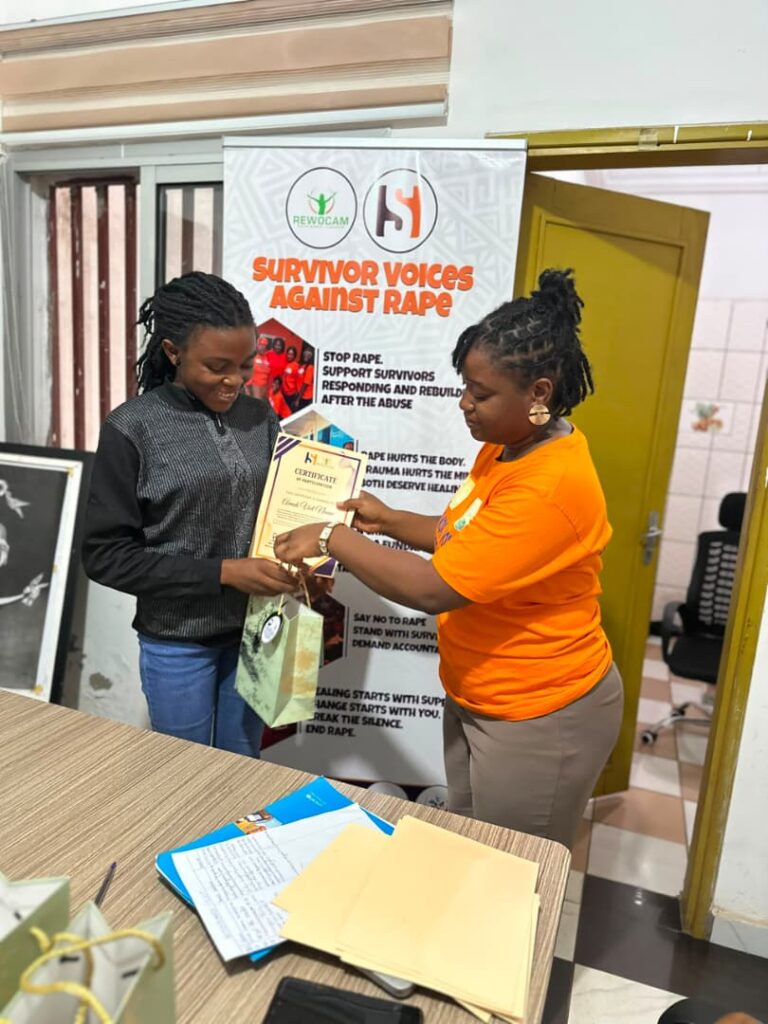
“We believe these 15 participants represent the beginning of a wider movement. As they return to their schools, workplaces, organisations and communities, they carry with them the skills and responsibility to train others, spark conversations and inspire action.”
Rather than measuring success by attendance alone, the project focuses on the ripple effect each participant is expected to create within their communities.
Advocacy begins with the right words
One of the bootcamp’s key sessions focused on text-based advocacy.
Led by advertiser, GBV and mental health advocate Emilien Bongdzeem D., participants explored how language can either empower survivors or unintentionally reinforce harmful stereotypes.
They learned that effective advocacy content begins with a compelling hook, communicates a clear message, uses survivor-centred language and concludes with a strong call to action.
The emphasis remained constant throughout the session: every word matters when communicating about trauma.
Designing messages that protect dignity
Visual communication formed another major pillar of the training.
Digital communications specialist and media literacy advocate, Abdel Oumar El-Bashir introduced participants to the principles of creating ethical advocacy graphics, covering colour psychology, typography, layout, visual hierarchy and the responsible use of imagery.
He stressed that successful advocacy designs do more than attract attention.
“A good design contains a compelling headline, a clear awareness or prevention message, a short call to action encouraging people to protect children, report abuse or support survivors, alongside respectful and survivor-centred visuals,” he explained.
Beyond technical design skills, participants explored the ethical responsibility that comes with communicating about gender-based violence.
“The session focused on helping participants understand how visual communication can be used as a powerful advocacy tool to raise awareness, educate communities and inspire action against gender-based violence while maintaining a survivor-centred approach,” Oumar said.
The session challenged participants to see design not simply as aesthetics but as a tool capable of shaping public perception and encouraging meaningful conversations.
Bringing artificial intelligence into advocacy
As artificial intelligence rapidly transforms communication, participants were introduced to practical ways of integrating AI into advocacy campaigns.
AI adoption specialist Buinwi Kenneth demonstrated how carefully written prompts can improve content generation while maintaining ethical standards.
Participants learned that effective prompts clearly define the role, task, audience, tone and desired format. For image generation, they were encouraged to specify subjects, moods, colours and even elements to avoid.
Buinwi repeatedly reminded participants that technology should never replace empathy.
Every AI-generated advocacy product, he noted, must undergo an ethics check to ensure it respects survivors and avoids reinforcing harmful narratives.
Telling stories through the lens
Photography and videography trainer Tangu Monkem, a creative director and filmmaker, rounded off the technical sessions by showing participants how visual storytelling can capture attention while preserving the dignity of survivors.
Through practical demonstrations, participants learned how thoughtful photography and video production can strengthen awareness campaigns without sensationalising violence.
The session reinforced a core principle echoed throughout the bootcamp: advocacy should inform, inspire action and protect those whose stories are being told.
A partnership built on shared purpose
The project was implemented by Safe Haven Foundation with support from Rescue Women Cameroon (REWOCAM) through the Survivor Voices Impact Grant (SUVAR).
According to Bongdzeem, the partnership extended beyond financial support.
“Their support made it possible to implement the project, including the Digital Advocacy and Storytelling Bootcamp, community engagement activities and the digital awareness campaign,” she said.
“Beyond financial support, the partnership reflected a shared commitment to empowering survivors, preventing rape and gender-based violence, and harnessing innovation and digital tools to strengthen communities.”
The beginning of a movement
For participants, the bootcamp offered more than technical knowledge. It expanded their understanding of advocacy in the digital age.
“I applied for the H.I.P.E.R.S. Bootcamp because I wanted to know more about digital advocacy,” said participant Unity Diangha.
“I achieved my objective because I gained knowledge in artificial intelligence, photography, videography and graphic design. I will use these skills to create content, tell stories and raise more awareness on rape and gender-based violence.”
That sense of purpose is precisely what the organisers hoped to inspire.
Looking back, Bongdzeem says she is satisfied with the outcome, not because the project has ended, but because its impact is only beginning.
“These participants are now equipped to become advocates and peer educators within their communities, creating a multiplier effect by sharing the knowledge, skills and values they gained with others,” she said. “We are confident that this ripple effect will continue to advance the project’s vision of harnessing innovation and digital power to empower survivors and strengthen communities long after the project has concluded.”
In a world where misinformation, online abuse and harmful stereotypes spread rapidly across digital platforms, the H.I.P.E.R.S. project offers a different vision—one where technology becomes a force for empathy, awareness and collective action, and where every responsible post, image or story contributes to building safer communities for survivors and those at risk.