
When Joy Mangwa* found out she was pregnant, she did not announce it in the newsroom. She kept quiet as she calculated how it would play out with her job. She calculated whether her editor would quietly reassign her from her presenter role. She wondered whether maternity leave was a written policy or an informal favour granted at management’s discretion as was the case with many other workplace rules.
She calculated whether coming back would mean returning to her role, or returning to a more obscure version of it or if they would even let her return. Joy’s case is more of the norm than an isolated incident.
Across newsrooms in Cameroon, women journalists have to do a lot of maths long before they do the pregnancy reveals. They weigh how much of themselves to expose in workplaces that demand endless sacrifices but rarely guarantee security. In most cases, the math does not add up.
In this month of March when the International Women’s Day is commemorated, media houses join the frenzy – roundtables, sports walks and games, hikes, dramas and traditional speeches about empowering women. But a harder question lingers after the fabric and the photo sessions: what happens when the women who gather, treat, disseminate and analyse the news need protection themselves?
In many newsrooms, the answer is unclear.
The law vs reality
Cameroon’s labour law provides for maternity protection, permitting pregnant employees to get leave with guaranteed job security. But the lived experiences of women journalists remains isolated from these provisions, especially in private media houses where contracts are short-term or non existent, freelance arrangements are common, and employment structures are often informal, based on word of mouth.
“For those of us working in the private sector, the reality is harsh and often disheartening. A few are fortunate to hold contracts, but in many cases, those contracts exist only on paper. On the ground, the situation tells a different story: no health insurance, no pension benefits, no social security guarantees. It is a system where we work like elephants but feed like ants,” Joy explains.
For many women in media like Joy, formal contracts and maternity leave are dependent on how well they can negotiate and in some cases, tends to mark the beginning of quite exclusion altogether.
To Joy, pregnancy is regarded by the ecosystem as an inconvenience to work: “I worked until 24 hours before my expected delivery date. I left the office and went straight to the hospital, where I gave birth. Even then, I had to plead for my position to be secured.”
Two weeks later, “physically weak and emotionally overwhelmed,” Joy returned to work. Even that was not enough to secure the support she deserved.
“Work had to go on… this is not the profession many of us once looked up to,” she adds
Beyond pregnancy: structural barriers
Maternity protection is only one layer of the challenge. The lack of formal contracts, access to health insurance, sick leave, sexual harassment safeguards, and pathways to leadership create systemic barriers. The irony is stark: newsrooms exist to interrogate power, demand transparency, and expose corruption, yet rarely scrutinize their own practices.
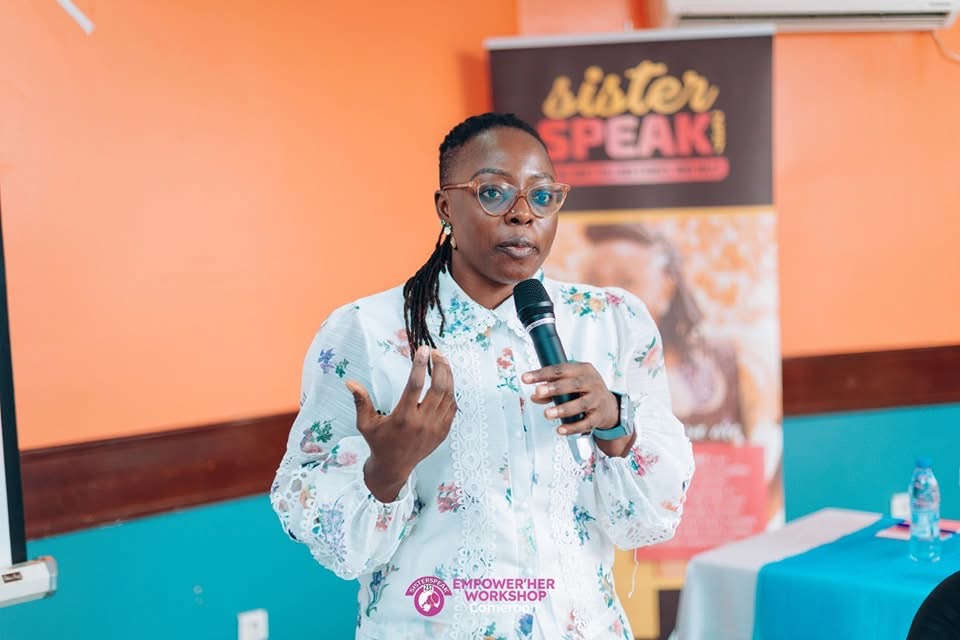
“I have seen cases where women return to work barely three weeks after giving birth because staying home longer means risking job loss. For many, pregnancy becomes a source of anxiety instead of joy, because their employment and financial stability often depend on their physical presence at work, says Multimedia Journalist and Founder of Sisterspeak237, Comfort Mussa.
She adds that another major barrier women are made to face in the media, is “the persistent culture of patriarchy.”
“Leadership positions, prime beats, and high-visibility assignments often continue to favour men, which limits women’s access to decision‑making spaces and career‑advancing opportunities.”
It is this gap that feeds and nurtures the growth of challenges faced by women in the media.
Ebot Takang, a business reporter with Ecofin Agency, points to the lack of definition and measurement of harassment as part of the problem. A global study by the World Association of Newspapers (WAN-IFRA) in 2022 found that 41% of women journalists experienced verbal or physical harassment at work, but only one in five reported it. In Cameroon, this number may be higher.
“Harassment is not well-defined because there is no threshold or nobody measures it… they play around the definition of the word harassment. By the time you try to report it, they can always argue, ‘No, it was not harassment, I just did this,’” Ebot explains.
Normalising a culture of harassment
A survey by the International Federation of Journalists (IFJ), 66% of women journalists who experienced abuse did not file a formal complaint, often due to fear of retaliation or lack of effective reporting systems. shows 66% of women journalists who experienced abuse did not file a complaint, often due to fear of retaliation or ineffective reporting mechanisms.
One female reporter, speaking on condition of anonymity, described how the absence of formal contracts limits her professional opportunities. She cannot always be assigned to reporting trips because the employer cannot cover security or mission allowances.
At the same time, she recounts a workplace culture where harassment has become “normalized,” with some supervisors demanding hugs, kisses, or other forms of personal attention in exchange for professional opportunities. According to her, refusing such advances can lead to stalled files, blocked promotions, or restricted assignments.
The situation is compounded by the lack of effective reporting mechanisms: with male colleagues, supervisors, editors, and directors all implicated in the same culture, she says many women feel there is no safe authority to turn to, leaving them to navigate intimidation, unwanted advances, and professional retaliation largely on their own.
Targeted online, unprotected offline

Online harassment adds another layer of challenge for women in media. Khadijah El-Usman, programmes officer at Paradigm Initiative, says: “Online harassment affects women journalists indiscriminately and disproportionately… When a woman expresses an opinion, investigates a sensitive issue, or challenges dominant narratives, harassment is often deployed deliberately to humble, punish, silence, or put her in her place.”
These attacks are frequently sexualized, personal, and moralizing rather than professional. Yet many institutions treat them as personal issues rather than institutional responsibilities.
Khadijah adds that: “while some media institutions acknowledge online abuse, many still lack clear, enforceable policies that make women feel genuinely protected. Too often, online harassment is treated as a personal issue rather than an institutional responsibility.”
Comfort Mussa notes that the lack of digital literacy opportunities for women in media exacerbates vulnerability. With this, when faced with harassment and online attacks, they are not coming back to the newsroom to be shielded, as some of the attacks emanate from their fellow media colleagues.
Added to this is the lack of adherence and in most cases, complete absence of policies to prevent and address harassment in all forms. Comfort Mussa says this absence of structured accountability “leaves female journalists largely to deal with harassment on their own, even though it directly affects their safety, mental well-being, and freedom of expression.”
“I have seen women forced to resign when the situation became unbearable because their workplaces lacked safeguarding policies and clear accountability mechanisms,” she tells CTNP, “this not only derails careers but also reinforces a culture of silence.”
Exceptions and the silence elsewhere
Not all newsroom leaders agree that the challenges women journalists face are widespread, but the gap between policy and practice remains stark. Doh Bertrand, Managing Editor of The Guardian Post, says, “All female staff who put to birth have three months of maternity leave and are entitled to all their benefits including salary during such benefits.” He adds: “Pregnancy is not a reason for termination of contract” at his institution, citing that two female staff recently returned from paid maternity leave.

Bertrand adds: “We thrive on respect for personal boundaries. Colleagues are urged to respect each other’s personal space while looking out for each other as a team… Staff are encouraged to report harassment without fear of who is concerned, and management works to keep work relationships professional.”
He claims there are no barriers for women rising to editorial leadership roles: “Women who have proven they can handle such roles often get them. We have had female desk editors, regional bureau chiefs, and divisional bureau chiefs, and currently have women in leadership positions. On return-to-work policies for new mothers, we limit women from very hectic tasks or long days of mission to allow them to play their roles as nursing mothers and staff.”
While The Guardian Post appears to set a benchmark in maternity support and workplace respect for women, questions linger about whether these practices are mirrored elsewhere in Cameroon’s media landscape. Sources from other media houses indicate that formal policies on maternity leave, flexible schedules, and protection against harassment are either inconsistent or entirely absent. Many women journalists, particularly in smaller or privately owned outlets, report working without formal contracts, which directly affects everything else about their work.
The bigger question, as observed by the Camer Today News Project, is whether media leaders across the country via their unions and shared spaces are willing to institutionalise such measures. Their silence so far underscores a broader challenge: even when laws exist or best practices are known, their adoption is uneven, and female journalists in many workplaces remain vulnerable to career setbacks, harassment, and undue pressure.
Loud silence on newsroom accountability
One conversation that frequently surfaces in media circles in Cameroon revolves around the financial realities of running a newsroom. In past discussions, some private media operators have pointed to tight operating margins, explaining that many outlets operate in a fragile economic environment where advertising revenues are inconsistent and operational costs remain high. Within this context, they argue that implementing additional workplace protections or formal employment arrangements can be difficult for organizations already struggling to stay afloat.
Yet when the conversation shifts to how these structural realities affect newsroom culture and more particularly, the experiences of women journalists, the willingness to engage becomes noticeably more restrained. Some invitations to comment on these issues for this report received courteous acknowledgements but limited elaboration. The reticence itself reflects a broader challenge within the industry one that is often easier to observe from the outside than to confront internally.
Globally, the problem is not unique. Studies show that 40–60% of women journalists experience harassment or abuse linked to work, and nearly three-quarters face online attacks. Institutions confident in their policies and systems tend to welcome scrutiny, especially when it strengthens their own processes. Against this backdrop, meaningful dialogue within media institutions becomes particularly important. It is common knowledge that professional spaces that are confident in their internal systems and practices tend to be more comfortable opening them up to scrutiny especially when the aim is to strengthen the very standards the media industry champions in public life.
The price of being seen
Back in the newsroom, Joy does not regret becoming a mother, but she wishes she had not had to choose between building a career and being present for her children. Unfortunately, she is still doing the math. Birthdays, school events, public holidays, and health crises continue to collide with the demands of a profession that often turns a blind eye.
And she knows that for a long time to come, the media industry will not do its math or suddenly see past her gender. Still, Joy heads out everyday, gathering information, chasing down sources and bringing back stories that change her community, even when it means exposing truths others fear to confront.
For women in Cameroon’s media, motherhood is seldom celebrated. Harassment, invisibility, stalled careers, and the silence of those in power form an invisible cage, exacting a heavy emotional toll. And yet, the stories continue to pour in. These women, who hold up the news, shape public understanding, and illuminate the failures of others, deserve the same protection, respect, and opportunities they demand for everyone else. Sacrificing their well-being for their careers is the price they pay just to be seen and often still not acknowledged.
*Name changed to protect the identity of the journalist.
By Giyo Ndzi and Ticha Bizel-Bi Mafor