
By Beng Emmanuel Kum
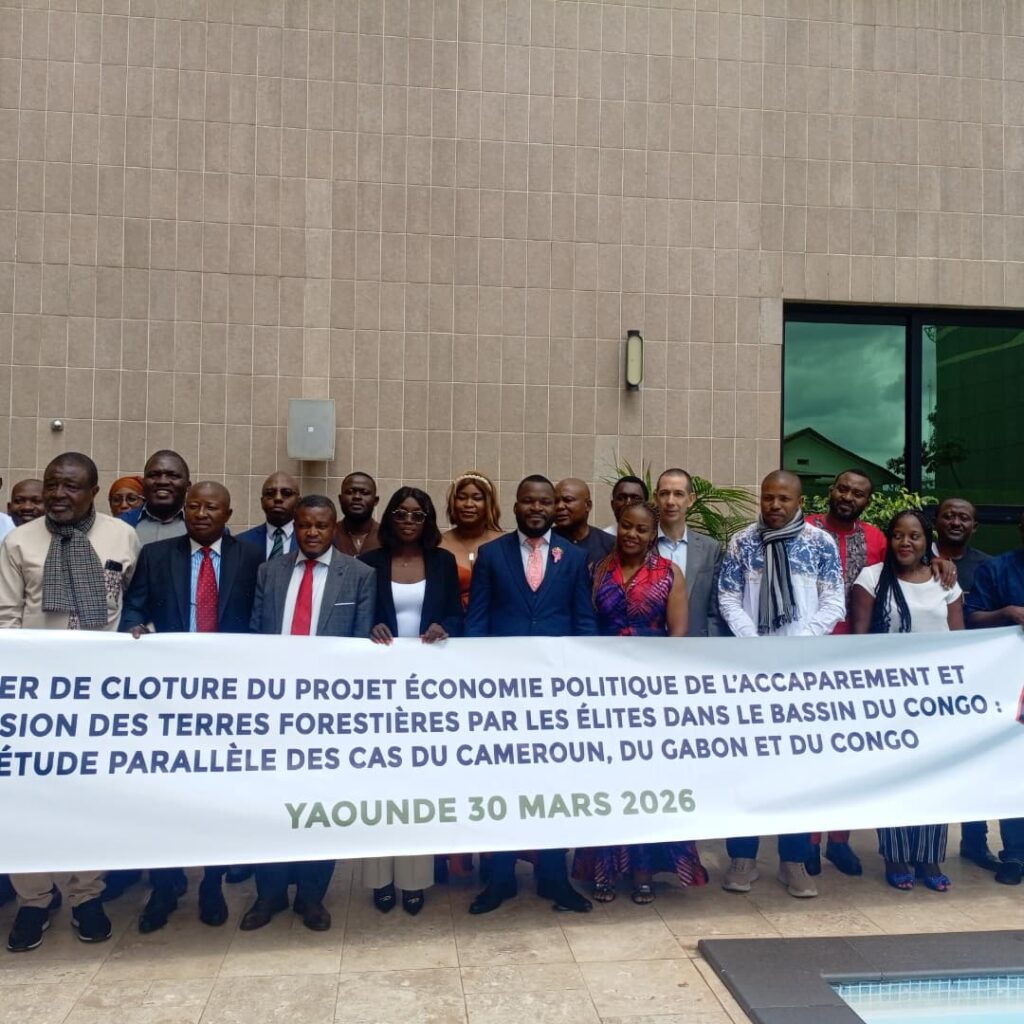
A new study has revealed that elites in Cameroon, Gabon and Congo Brazzaville, are actively involved in land grabbing.
The results of the study were made public yesterday. This was during the close of a workshop in Yaoundé.
The study was conducted by the Centre for International Forestry Research and World Agroforestry, CIFOR-ICRAF consortium, Green Development Advocates, GDA, and the University of Yaoundé I, UYI.
The study was carried out thanks to funding from the European Union, EU, the funders of the Applied Research in Ecology and Social Sciences, RESSAC Project.
The research is titled: The Political Economy of Land Grabbing and Conversion by elites in the Congo Basin: A Parallel case study of Cameroon, Gabon and the Congo.
The study, it was revealed, provided an opportunity to examine the phenomenon of land grabbing in these countries from an unusual perspective: that of their intra-national dimension.
This, experts argued, was because research on the appropriation of forest land has been of greater interest to researchers and civil society organizations from the perspective of foreign investors.
According to Dr Salomon Essaga Eteme, Ph.D, a post-doctoral researcher, in charge of the RESAC project, from the years 2007-2008, with the great economic crisis in the world, the phenomenon of land grabbing has greatly been amplified.
Due to this surge in cases, Dr Essaga insisted, there has been a great interest of researchers around the question of the global acquisition of forest lands.
The RESSAC postdoctoral fellow however explained that there has been “very little documented” over the years of the phenomenon in the Congo Basin This, he added, was a sharp contrast to other parts of the world like in Latin America, West Africa, and even East Africa.
“Our first interest on a scientific level was to document the phenomenon of the grabbing of forest land in the Congo Basin, and to be able to evaluate these impacts on a social, economic and on the environmental level,” Dr Essaga said.
Dr Essaga told reporters that the elites “constitute important actors in the phenomenon of the grabbing of forest land”.
“From what we have seen, we have political and administrative elites who are involved in the land acquisition, whether it is in Cameroon, in Congo, or in Gabon,” Dr Essaga revealed.
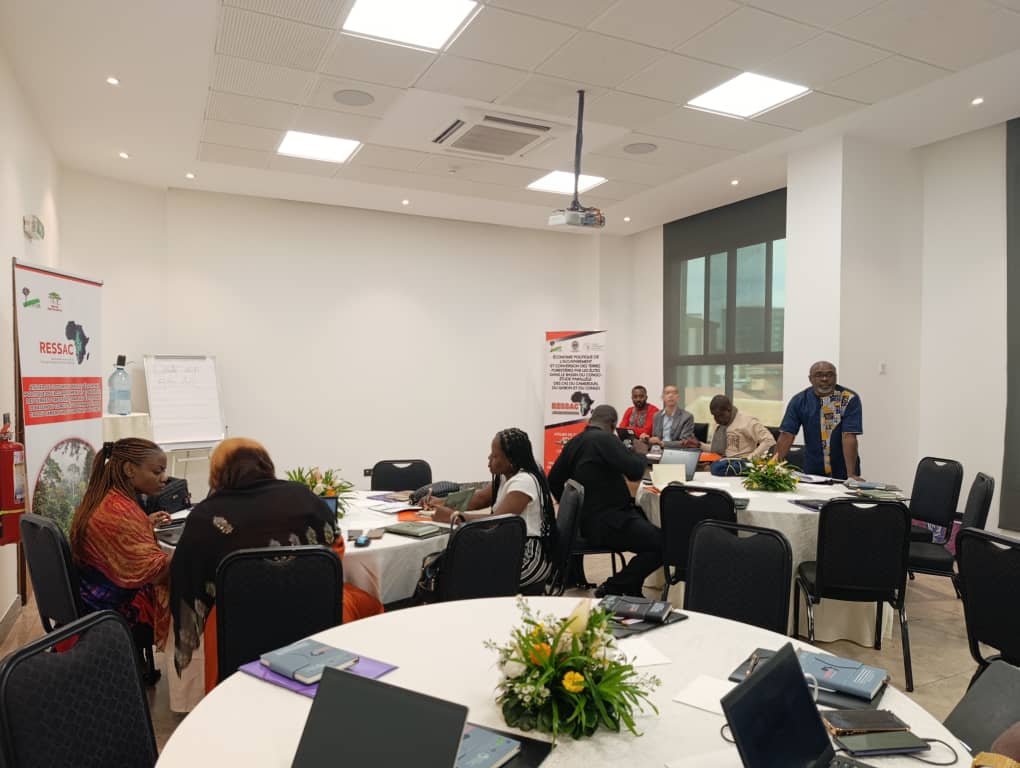
Cross section of participants during workshop
Dr Essaga also went further to explain that “these are sometimes overpowering elites” including others whom he labelled as “economic elites, that is to say businessmen, who are involved in the phenomenon.”
Speaking specifically on the case of Cameroon with regards to the legal process, Dr Essaga said “there have been slight modifications” but insisted that “there is a need for deep revisions of this law, which in fact was only a transitory law.”
He also said with the current law, “we realize that it opens gaps, in fact, which facilitates the grabbing process”.
Dr Assaga also pointed out the situation in Congo Brazzaville and Gabon.
Significant consequences
Speaking earlier, the Senior Technical Advisor at CIFOR, Assembe Mvondo Samuel PhD, explained that land grabbing and the related conversion of land are two phenomena with significant socio-economic and environmental consequences.
From a socio-economic perspective, it was said, these activities influence the lives of rural communities and the national economies of the countries where the forests are produced.
It was also revealed that environmentally, the conversion of forest land leads to loss of forest biodiversity and ecosystem services.
Assembe Mvondo also urged authorities to implement measures to protect land “because it is also a resource” and emphasized the need to revise the current law.
On his part, the Coordinator of GDA, Aristide Chacgom underscored the importance of the study. The not-to-profit organization played a key role in the project and the study.
The GDA official said land grabbing was very common in Cameroon. According to him, since 2011, Cameron has been engaged in tackling the phenomenon. He urged stakeholders to put all hands-on deck to ensure that the fight is effective.