
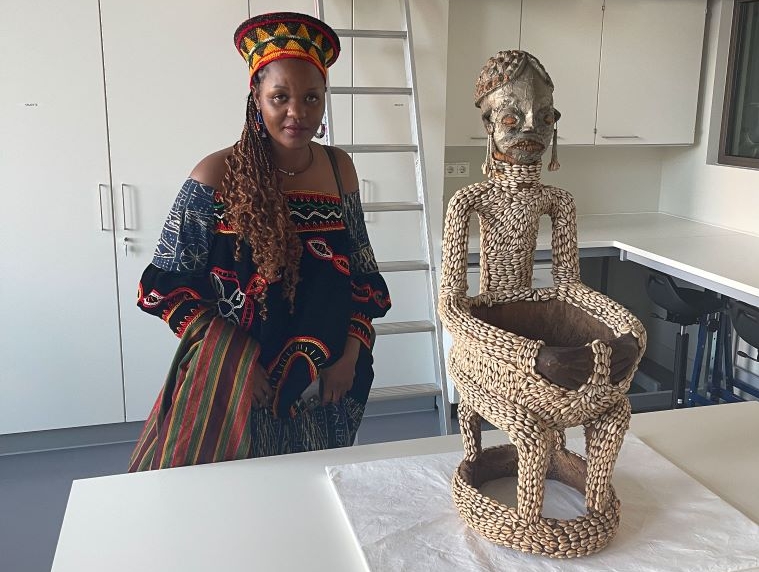
Close to four years after Germany’s Prussian Cultural Heritage Foundation agreed to restitute Ngonnso, the sacred founding figure of Cameroon’s Nso people, the artefact remains in Berlin, raising renewed questions about why the return has not been completed. The decision, announced in 2022, was widely welcomed as a milestone in long-standing claims by the Nso community for the return of the cultural object, which was taken over 125 years ago during the colonial period. But despite the formal agreement, no public timeline for the physical transfer has been confirmed.
The continued absence has prompted concern among cultural advocates and members of the Nso community, who say the delay is difficult to reconcile with what they describe as an already settled decision. According to REGARTLESS which has been at the fore of the restitution movement, “this delay is particularly ambiguous given that the Nso community’s pursuit of restitution spans more than three decades, yet the return of Ngonnso continues to face unexplained delays.”
This disparity, the organisation adds, “sends a troubling message: that their history, their heritage, and their rightful claim to justice does not matter. At a time when the world increasingly recognizes the importance of returning looted cultural heritage, the continued postponement of Ngonnso’s return has become a symbol of unequal treatment and an enduring failure to honor commitments already made.”
Four years on, the Cameroonian authorities have not made any public revelations on their planned roadmap for the return, or an expected date. Restitution processes typically involve coordination between national governments, museum authorities, the concerned communities legal frameworks governing cultural property, and transport and conservation planning. In the case of the Ngonnso case, stakeholders would include German cultural heritage authorities, the Cameroonian government, and representatives of the Nso traditional leadership. However, the absence of publicly available updates has contributed to growing frustration among advocates, who say the lack of transparency risks undermining confidence in restitution commitments.
With lack of openness on any ensuing administrative or logistical steps since the restitution announcement, activists are increasingly questioning whether the delay reflects procedural complexity or a lack of political urgency in implementing the decision. While the principle of restitution has been acknowledged, implementation has not kept pace with expectations created by the announcement.
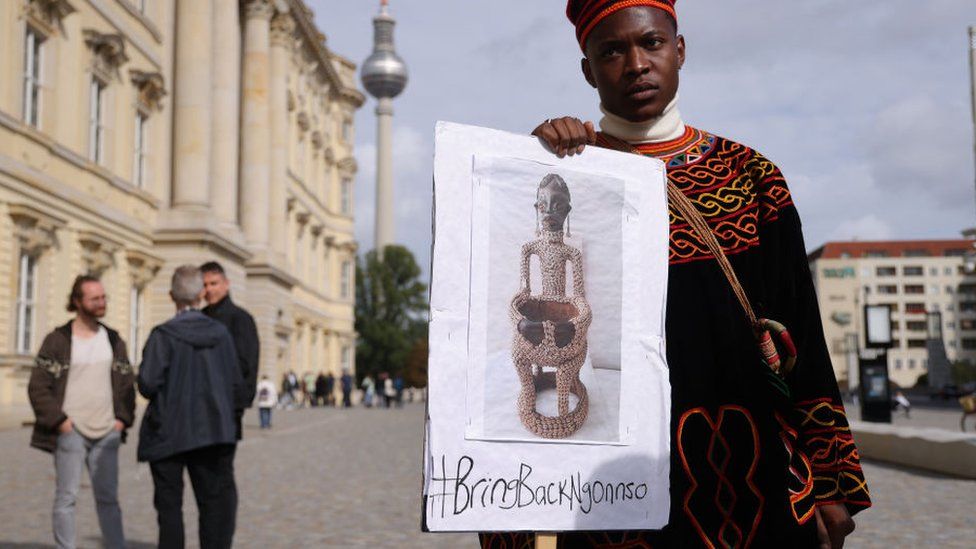
It is for this reason that Regartless is leading a public campaign to call for a clear timeline and public reporting on progress, arguing that decisions without execution leave longstanding historical grievances unresolved.
Not just objects
Beyond just an object, the Ngonnso holds immense historical and cultural value to the Nso people. “We revere our ancestors. The statue is seen as a connection between the living and our ancestors, and we also use it to invoke fertility of the soil, among other rituals,” Cameroonian restitution activist, Sylvie Vernyuy Njobati, told TRT Afrika in 2023. This was just a year after Nigeria welcomed two of its over 3,000 Benin Bronzes.
Since then however, other communities in Cameroon and Africa have seen some sacred objects belonging to their communities restituted, including the eight Bangwa artefacts in March 2024, facilitated by REGARTLESS. Sylvie Njobati described the process as an emotional one for the concerned communities: “Watching the people connect to their artifacts upon return – the tears, the emotions, and the excitement—reminded us of the importance of the work we do as an organization . . . I won’t sacrifice that moment for nothing.”
But she and hundreds of thousands of members of the Nso community home and abroad will have to wait longer for their turn.
The case has also re-ignited broader discussions about the pace and consistency of African cultural restitution efforts. While several high-profile artefacts have been returned to countries including Nigeria and Ghana in recent years, other cases remain unresolved or have progressed without publicly detailed timelines.
For the Nso community, Ngonnso is not merely an artefact but a spiritual and historical symbol of identity and origin, making the continued delay particularly sensitive. With the four-year mark since the restitution announcement approaching, pressure is expected to intensify on all parties involved to clarify the status of the process and outline the remaining steps toward completion.
For now, however, Ngonnso remains in Germany, and the question of when she will return to Cameroon remains unanswered.
Taking action
Ahead of the fourth anniversary marking the decision to return the artefact, plans are afoot to host a public cleansing ritual and draw attention to the delay. “… For many within the Nso community, this disparity sends a troubling message: that their history, their heritage, and their rightful claim to justice does not matter. At a time when the world increasingly recognises the importance of returning looted cultural heritage, the continued postponement of Ngonnso’s return has become a symbol of unequal treatment and an enduring failure to honor commitments already made,” REGARTLESS noted.
The June 26, 2026 public cleansing ritual is expected to bring together traditional authorities, community members, cultural practitioners, youth, and advocates who continue to call for the acceleration of the return process.