
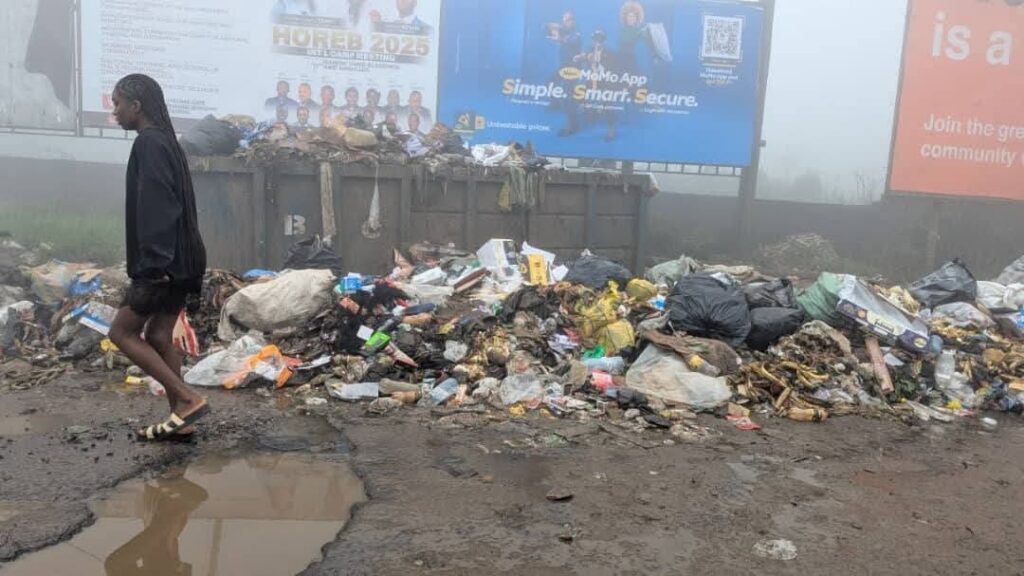
The poor waste management crisis in Buea serves as a breeding ground for air and water-borne diseases. However, entrepreneurs encourage strategies to sustainably transform waste into eco-friendly coal that serves domestic purposes and creates sustainable employment for youths.
Local entrepreneurs identified under the Eco Recycling Renewable Energy (ECORACAM) in Buea have devised innovative strategies to sustainably manage and transform both biodegradable and non-biodegradable waste that have for several months posed health concerns to inhabitants of Buea and its environs.
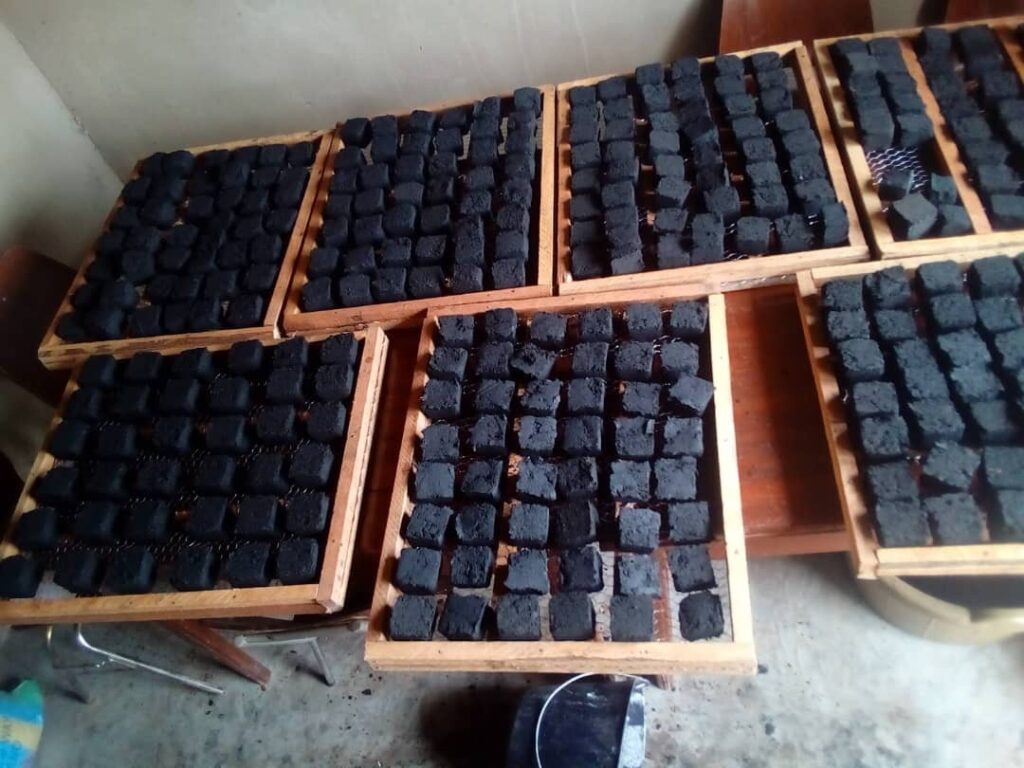
Njom Ignatius Nji, a member of ECORACAM, Buea has developed mechanisms to manufacture charcoal from biodegradable household waste and plastic pavers from non-biodegradable materials. These initiatives, he says, not only help reduce municipal waste but also create employment opportunities for residents.
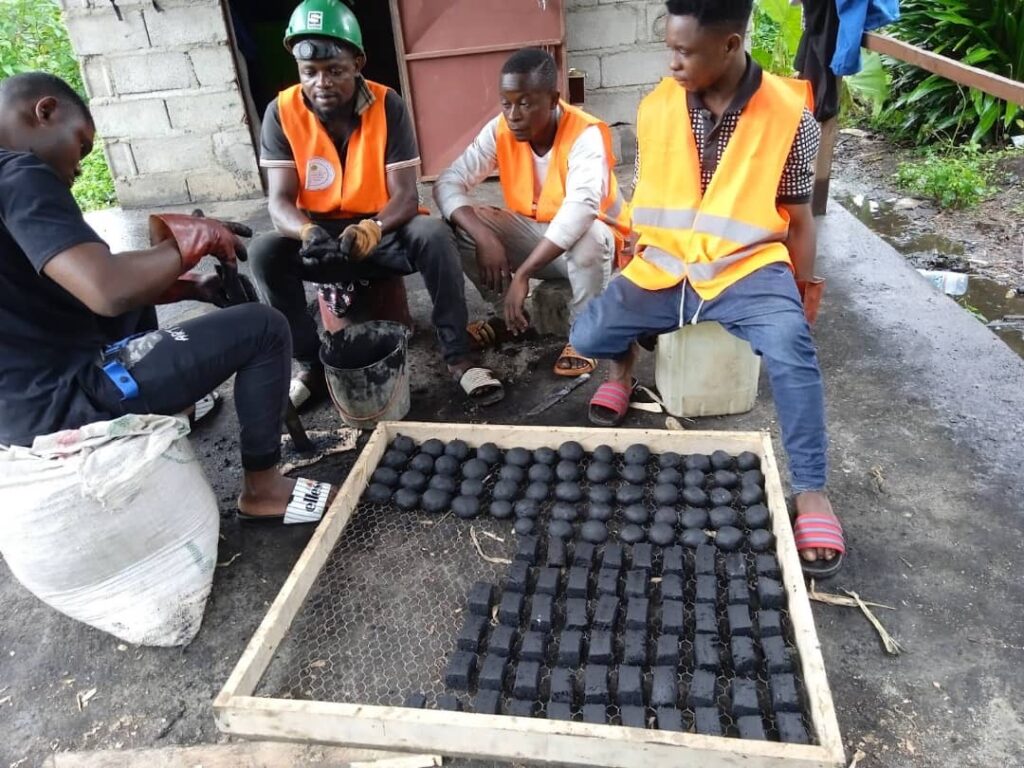
The initiative, he says, is geared at mitigating the burgeoning unsorted waste disposal within major inhabited communities in Buea that has for several years served as a stark reminder of both the socio-political and environmental crises plaguing the South West Region of Cameroon, thus necessitating innovative waste management paradigms.
Public Health Threat
Broadly, environmentalists define waste disposal as the act of collecting, processing, and recycling waste of human society.
These piles of trash that are often comprised of both solid and liquid waste not only mar the town’s aesthetics but also pose serious health risks to residents. According to the South West’s Regional Delegate of Environment, Set Ekwadi Songe, the mismanagement of waste has led to a variety of ecological problems like air pollution and soil contamination, resulting in health problems like Malaria, cholera, typhoid, and respiratory infections.
“The lack of adequate waste management infrastructure is another major contributing factor to the crisis,” Delegate Set Ekwadi revealed.
He supplemented that “Many communities lack the necessary facilities, such as waste collection services and recycling centers, to properly manage their waste. This has led to the indiscriminate dumping of waste in public areas, including streets, parks, and waterways.”
Lamenting the improper disposal of waste in waterways and landfills, Fonge Beatrice, a Professor in Plant Ecology and Hydrobiology, revealed that “the decomposed water from accumulated dumping sites sinks into the water floor, thus contaminating the earth’s water.
This is often tapped into boreholes and water tanks to supply households, schools and other establishments for domestic use.” The Professor added that “Contaminated water sources give rise to outbreaks of waterborne diseases and other infections in our communities.
Also, the accumulation of waste in public spaces has created breeding grounds for mosquitoes, contributing to the spread of malaria to inhabitants”.
Destructively, “the penetration of decomposed municipal waste into groundwater has disrupted aquatic ecosystems and poses a direct threat to human health. The bioaccumulation of toxins in crops can lead to serious health issues in humans, including neurological disorders, organ damage, and increased cancer risks,” Professor Fonge elucidated.
Traditional Survival Patterns
While breathing fresh air in most communities feels like a luxury, local inhabitants have devised ways to regulate their breath while navigating a stench-polluted zone.
“When passing through a stuffy area, I have become accustomed to covering my nostrils with an upward twist of my lips to cover my nostrils while holding my breath and running through the stench emanating from the dumpsite. This reflexive habit has become a norm for survival,” Emma Esongwe, a Bokwai resident, demonstrated.
To further adapt to the air filtration process, some denizens have become accustomed to using nose masks.
“Formerly, nose masks were indicative of COVID-19. Now vendors have normalised the sale of these masks to local inhabitants like myself, who use them to curtail us from inhaling polluted air and curb the stress of covering our nostrils with an upward twist of our lips,” Esongwe added.
Form of Agricultural Development
More so, to ensure the cultivation of healthy crops void of harmful toxins, small-scale farmers in the Bokwai neighbourhood have resorted to using biodegradable waste as farm manure. “The major fertiliser I use in my huckleberry farm is kitchen waste collected from several homes in my neighbourhood.
This serves as natural fertiliser in my farm, keeps consumers chemical-free, and eases my neighbour’s kitchen waste disposal. In fact, I have stationed a bin to collect biodegradable waste from my neighbours so I can have adequate fertiliser for my crops,” Nayongo Sandrine, a local farmer, detailed smilingly.
Despite the growing concerns, awareness about the importance of proper waste management remains low among the general public. As the world celebrates World Environment Day on June 5 under the theme “Inspired by Nature. For Climate. For Our Future,” experts recommend a multifaceted approach to the waste management crisis.
“This includes investing in waste collection services, recycling facilities and landfills; raising public awareness about proper waste management; implementing stricter regulations by municipal and local community leaders; and encouraging community involvement in waste management initiatives.
By taking these steps, Buea and Cameroon can make significant progress in addressing its waste management crisis and creating a more sustainable and healthier environment for its citizens,” the South West Regional Delegate for Environment urged.