
Some of the riskiest things we ever did were when we were kids. Risky jumps, tree climbing, small fights, risky sports, and playing in the rain. Because that is what kids do. When a baby is made, it does not know what can be done and what cannot and so it learns these by doing – until adults say it can’t, or painful experience compels it to stop being curious.
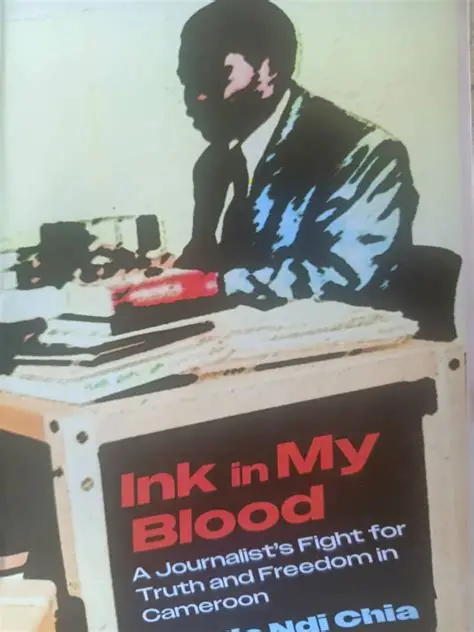
Still, even at the height of my childish curiosity, there are things I never figured out I could try. Like roasting a sugarcane. But I know someone who did. And while it almost ended their life, it had little or no effect on their curiosity. If anything, it reinforced it. 50 years later, this experience is now just one in a line of so many that shaped the curiosity and bravado of one of Cameroon’s finest ink soldiers – Charlie Ndi Chia.
In his memoir, Ink in my Blood, the crucifier of dishonest men, former aspiring shipbuilder and truth chaser recounts a life of rebellion, resistance and relentless storytelling. The first part identifies Charlie’s not-so-smooth introduction to journalism and how he fought his way out of his parents’ dreams for him, a battle few still manage to win today.
Comfortably taking shots at himself, Charlie attributes the downside of his sugarcane roasting incident to ‘impatience’ and ‘chldish carelessness.’ These are but a reflection of the entire piece, you get a shot, I get a shot and Paul Biya gets two. His adventures as a child and student were the building blocks of the seeds dissent which would go on to impact his family, friends and foes for so many years to come.
As a kid, I would listen with admiration as my grandfather recounted their kolanut expeditions in neighbouring Nigeria. From lifestyle to food and culture, he saw Nigeria as his home and would tell anyone who cared to listen how much fun the trips were, and how they lived as brothers and sisters.
In Charlie’s time, market dynamics had changed and Kolanut trade was no longer the thing. It was fast becoming just some ‘fruit’ people ate while discussing the real cash crop of the early nineties – education.
He earned a Diploma from the Nigerian Institute of Journalism in 1981 and went on to serve as a reporter with the Nigerian Television Authority (NTA) before returning home.
Over 40 years ago and hardly much seems to have changed. To put this in perspective, over 40 years later, we still have hundreds of Cameroonian students crossing over (some by flying boat) to Nigeria just to become lawyers. So much for greater ambitions…
Uncle Charlie as he is fondly referred to, writes: “After graduation, I returned to Cameroon, armed with new skills and a deeper understanding of my craft, ready to take on the challenges of journalism in my own country.”
And challenges he did take on. But at what cost?
Check out Part II here
————————————
Giyo Ndzi is a Cameroonian journalist and storyteller passionate about truth-telling and media freedom. He served at The Guardian Post Daily as a reporter and later as Desk Editor, where he covered politics, social issues, entertainment & culture, and the ever-complicated landscape of press freedom in Cameroon. Though not his first newsroom, The Guardian Post was where his reporting matured, sharpened by tight deadlines, and the weight of telling stories that matter.
He continues to write and reflect from the crossroads of journalism, advocacy, and lived experience.
Apparently…