

One of the first direct challenges to my work as a journalist came sometime in 2020. Until then, the major hindrance had been random Amba boys who would call and send in threats or try to ask for financial support for their cause. This sent me into incognito mode. Not for myself, but for the people I cared about. I was young, hotheaded and eager to report, but I also knew where I was coming from and valued the people in my life. Going incognito on social media worked beautifully as a panacea.
But I was yet to meet a more direct threat to my work. Some time around 2020, one of the instructors for our Masters Degree Programme who is a renowned figure in Africa’s peace landscape made some questionable remarks about the Anglophone Crisis, and The Guardian Post newspaper where I worked at the time, told the story. When I penned that article, it first felt like just another. Little did I know it was going to initiate an eye-opening experience for me. It also reminded me of a similar thread in Chapter II of Uncle Charlie’s Ink in Charlie’s Blood where his run-ins with power and principle play out with a raging fire only few dared kindle.
After telling me off on WhatsApp, the Professor would spend a considerable amount of time in his next class to talk about how the media organ and its journalist (me) were misguided, ill intended and attention-seeking. While he ended at that, some of his bellboys who were my classmates did not. I remember one telling me after class I deserved to be locked up. It is always the cronies. The bellboys. The lackeys.
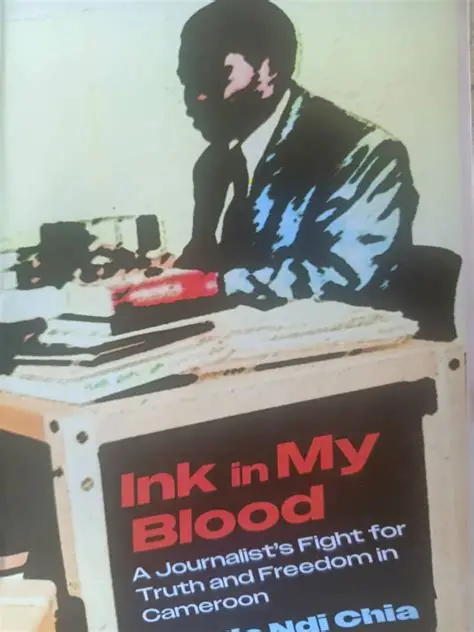
Uncle Charlie in my shoes would have used a fly swat like it was no man’s business. He had seen worse days. One of such ended with him serving time at the dreaded Kondengui Prison in Yaounde. It appears every ‘problem’ he got into for reporting a story was worse than the previous. But one I found particularly funny was a 1985 edition of the Sunday Times that carried the story of a Doctor who was caught frolicking with an MP’s wife. After the lawmaker who in turn brutalised the physician tried to bury the story, Uncle Charlie smuggled out copies and the story was told.
His justification? The MP and physician were both public figures. “One had the moral responsibility not to sleep with a married woman and the other, a responsibility not to assault someone publicly and then try to bully and silence the media.”
Like an ideal journalist Uncle Charlie can be rough on the edges but fine on the inside. He might have dodged a few bullets but a few did get him and they got him good. He tore a police summons and paid the price.
Through the birth of multiparty politics, he kept tabs of the song birds as they lept from one tree to another, changing songs almost overnight. Uncle Charlie prides himself as one of the few journalists who stood their grounds and risked their jobs when others feared to speak truth to power.
I wonder if Uncle Charlie was just built differently or if he quietly auditioned for a spot among the gods of journalism and got accepted. Because, in today’s world of carefully curated captions and sponsored silence, who still risks prison time just to say what everyone’s whispering in the taxi? Who still writes truth with both eyes open, knowing the cost? Maybe Uncle Charlie was forged in fire, or maybe he just didn’t care enough to play nice. Or he is the hunter telling the story of the lion hunt. Either way, it leaves me wondering: is such straightforwardness still possible today, or did Uncle Charlie finish the last batch and toss the recipe away?
Part Two of the memoir reads like a field manual for rebellious scribes, complete with bruises, jail days, and yet, a stubborn refusal to fold.
If you just stumbled on this, read Part I here. Or if you are up to speed, check out part III here.
————————————-
Giyo Ndzi is a Cameroonian journalist and storyteller passionate about truth-telling and media freedom. He served at The Guardian Post as a reporter and later as Desk Editor, where he covered politics, social issues, entertainment & culture. He continues to write and reflect from the crossroads of journalism, advocacy, and lived experience.
Apparently…
Pingback: [Ink in Charlie's blood: Le decryptage - I] Crucifiers of men: A Journalist's passion for truth begins with burning sugarcane - Camer Today
Pingback: [Ink in Charlie's blood: Le decryptage - III] Exile, booze and bold truths - Camer Today