
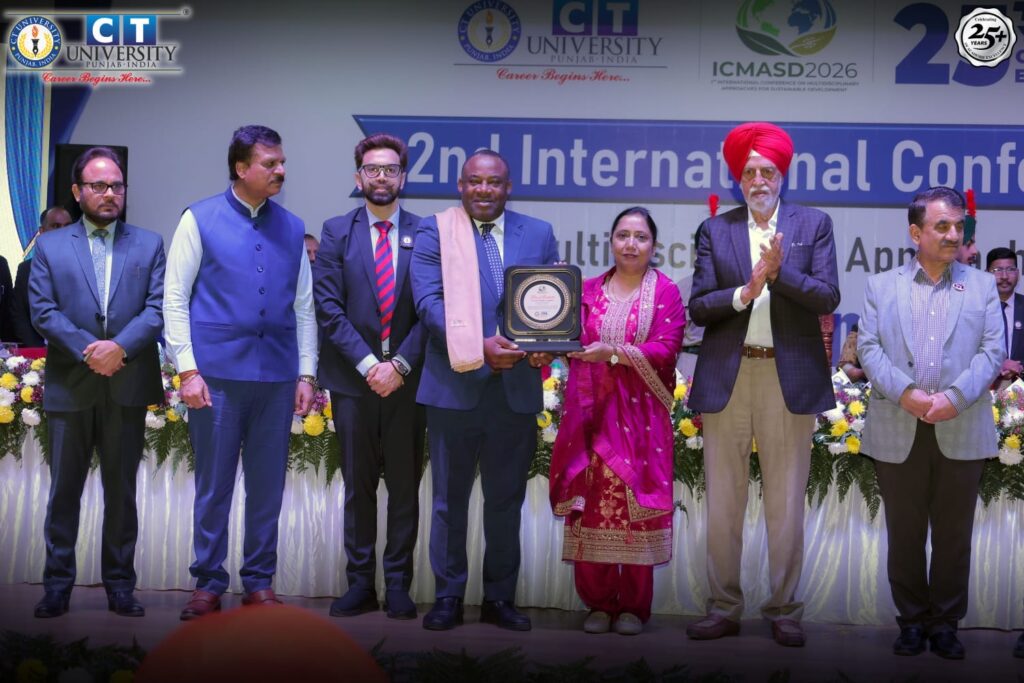
Cameroon’s University of Buea showcased its academic excellence on the international stage as Professor Kingsley Ngange and Dr. Nseme Stephen Ndode participated in the 2nd International Conference on Multidisciplinary Approaches for Sustainable Development (ICMASD 2026), held from February 27-28, 2026, at CT University in Ludhiana, Punjab, India.
The 2nd International Conference on Multidisciplinary Approaches for Sustainable Development (ICMASD 2026) brought together over 1,000 participants from across the globe, including scholars, policymakers, business persons and students, under one roof at CT University in Ludhiana, India. With a focus on sustainable development, cultural narratives, and progressive pedagogies, the conference provided a unique platform for cross-cultural exchange, collaborative research, and critical dialogue on pressing global challenges.
The opening ceremony was chaired by Dr. Balijit Kaur, Honourable Minister for Social Justice, Empowerment and Minorities, Government of Punjab, alongside Sir Charanjit Singh Channi, Chancellor and Chairman of CT University.
For the University of Buea delegation, the event was not only an opportunity to present their research on the transformative role of media in achieving the Sustainable Development Goals but also a stage to build strategic partnerships, exchange best practices, and position Cameroonian journalism training expertise within an international academic and policy-making network.
Representing the University of Buea, Professor Ngange, also Deputy Vice-Chancellor in charge of Research, Cooperation, and Relations with the Business World and Dr. Ndode, Senior Lecturer and Head of Division in charge of Business, delivered a presentation under Track 4: Cultural and Media Narratives, Public Governance and Progressive Pedagogies for Social Development.
Their paper, titled “Local Narratives, Global Agenda: How Media Shape Public Understanding and Action Toward Sustainability”, emphasized the critical role of media in achieving the Sustainable Development Goals (SDGs). The presentation underscored that media institutions must be actively integrated into SDG planning, monitoring, and evaluation, rather than treated as peripheral observers. They also highlighted the influence of media in fostering partnerships, a key focus of SDG 17, which champions collaboration among stakeholders.
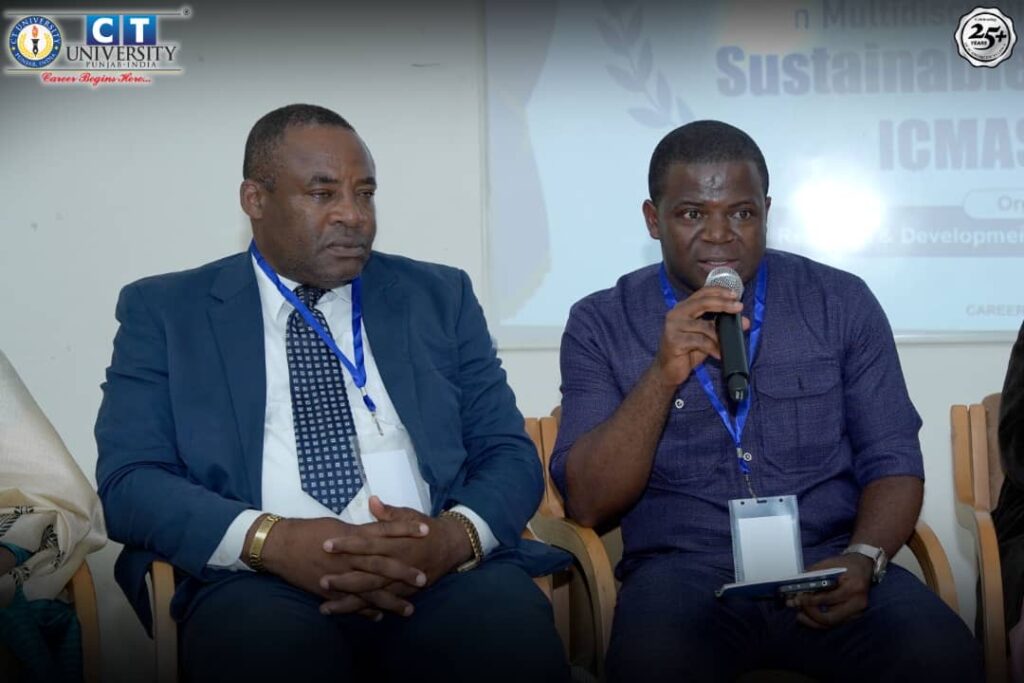
Ahead of the official conference sessions, both journalism trainers shared their expertise with students and faculty at CT University’s School of Social Sciences and Liberal Arts. Professor Ngange lectured on “Leveraging AI to Protect and Promote Press Freedom and Access to Information in Africa”, while Dr. Ndode explored “Evolving Patterns in the Relationship between Media and Audiences.”
During the track sessions, they also served as resource persons, reviewing and assessing presentations by peers, further cementing the University of Buea’s presence on the international academic stage.
Recognition and future collaboration
The contributions of Professor Ngange and Dr. Ndode did not go unnoticed. Both were awarded for their outstanding input to the success of the conference.

Their participation at the event is expected to strengthen future inter-institutional collaborations between CT University and the University of Buea, fostering exchanges that could enrich research, teaching, and sustainable development initiatives across both institutions.
As the world evaluates progress toward the 2030 SDG targets, the active participation of Cameroon’s media scholars highlights the growing role of local expertise in global discussions on sustainability, media, and governance.