
‘One of you is going to betray me’
‘Is it me jesus?’
‘Is it me jesus?’
‘Nye nye nye nyenye!’
Are you familiar with this Tiktok trend?
In late 2020, the now late chairman of the Social Democratic Front, John Fru Ndi chaired a meeting at the party’s Yaoundé headquarters. It was business as usual until he deviated from the subject matter to berate and insult a journalist, calling her ‘ugly.’
For me, that was the story. With the audio recording well secured, thanks to a colleague who was on ground, I was ably to tell the story. (See The Guardian Post No. 2034 of December 14, 2020).
But some disregarded it as a non event. It appeared not very many reporters thought a top politician bodyshaming a female journalist was worth reporting and swept it under the carpet. It was just one of his many similar actions.
Even the press house she represented was largely silent about it and reported the politician’s official word for the news. To date I have always wondered why the media organ reputed for holding authority to account without fear or favour seemed to look the other way this time.
Was it because they danced to his tune? Did they not value their colleague or they just did not find her ordeal in the politician’s hands newsy enough?
I felt betrayed on the victim’s behalf, especially as that was not an isolated incident of hositility of politicians towards journalists. A few days ago, a presidential candidate referred to a fellow journalist as ‘fake’ and after hurling threats at him, walked off the TV show. In a sane clime that would be the end of his supposed vision to lead even his local njangi house.
But we are not in a sane place. Here, the lunatics are many and they indeed run the place.
This did not start today. Media houses have proven time and again to accord their reporters the same if not less value as their office stationary which is often ignored, and almost falling apart. Reporters often become the unprotected witnesses when the rogues come for them.
The bitter irony? The very institutions that pride themselves on giving voice to the voiceless often fail to protect their own. Many journalists face precarious working conditions, with no insurance, no contracts, and little job security. Still, they gather the grace to take the punches (both figuratively and sometimes, literally), while the safety net they deserve is nowhere to be found.
As one who saw the inner doings and duelings of The Post newspaper, Charlie Ndi Chia in his memoir Ink in My Blood only digs the crevice even deeper. From his time at the state broadcaster to his stint at Cameroon Post, the reporter’s welfare would always come last.
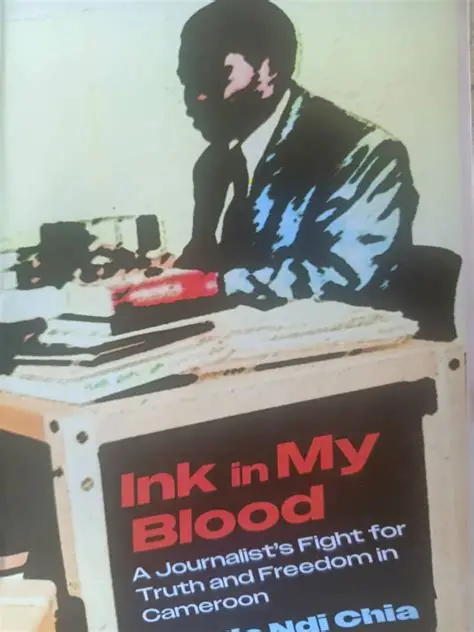
Then they created The Post. From a “hand to mouth” publication, it grew to a multimillion enterprise which to Charlie, cared less about oiling the dry lips of those who serviced its earlier years with sacrifice and sweat. He asserts that greed and political influences spoiled the broth. The longest in his memoir, the Crucifier of men’s 22-page expose on this subject matter lays bare his side of the story many have yearned for so long to hear.
The story of The Post from Uncle Charlie’s lens is one of betrayal for the cheque, a mini view of what the journalism profession has proven to be more often that not.
From headlines tagging Wazizi a terrorist to the non Ndian youth, examples abound. With the news business as the warfront, the reporters remain the first to take the bullets and the last to eat or at least, be adequately protected. From basic necessities like insurance to contracts, fixed salaries and work benefits, the pond is too muddy to swim. But with a beer and hope for telling the next story, we carry on.
***
Then the moment came for the Crucifier of Men to take the reins. The Rambler newspaper was born. New wine in old wine skin, it soon came down with its own issues, a demise Uncle Charlie largely attributes to The Anglophone armed conflict. Otherwise, “The Rambler could have thrived.”
The times have changed. Today, there is the proliferation of media houses, there is technology and a lot more the earlier generations never had. So too are there hurdles unfathomable. The Crucifier of men prescribes resilience, truth and responsibility for the new crop of reporters.
“And remember, above all, that service is the highest calling…”
The times have changed but Uncle Charlie hasn’t. Ink still runs in his blood.
Apparently …
Check out part III here in case you missed it.
———————————————————-
Giyo Ndzi is a Cameroonian journalist and storyteller passionate about truth-telling and media freedom.
His newsroom experience spans different outlets, including The Guardian Post where he served as reporter and later Desk Editor.
He continues to write and reflect from the crossroads of journalism, advocacy, and lived experience.
Pingback: [Ink in Charlie's blood: Le decryptage - III] Exile, booze and bold truths - Camer Today