
A night meant to close the CAMASEJ AGM became a mirror, reflecting the discipline, tensions, humour, excesses, and quiet lessons of a profession that knows how to argue, organise, and celebrate in equal measure.
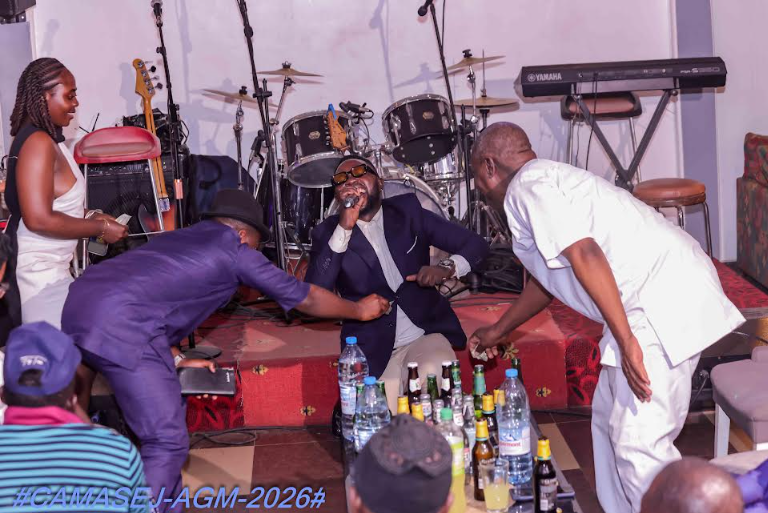
If there is one thing attending an Annual General Meeting (AGM) of almost any association teaches you, it is to never concede post-event photos with peace. The January 29-31 gathering of the Cameroon Association of English-Speaking Journalists (CAMASEJ) is no different. Multicom Media did a great job documenting the three-day sitting, providing alluring images and videos in real time. In all these, the smiles, I must say, are real.
But so too were the grudges, the alliances, the cold shoulders, and the occasional urge to flip a table or punch a colleague in the face. So when the CAMASEJ AGM finally wound its way to its last agenda item, the award night, I knew better than to expect a pure Disney ending.
Still, credit where it is due: the organisers did something revolutionary. They kept alcohol away at the start. In a room full of journalists, that alone deserves an award. And it worked: no broken microphones, no broken friendships (at least not publicly) and no flying chairs. Compared to recent AGMs I’ve heard about where lawyers allegedly threw punches, and the meeting didn’t even go ahead, this one was heavenly.
Or anything else close to that.
Now, stay with me for a while.
Let us start with appearances, because journalists may argue about ethics, politics, and union dues, but fashion? Fashion united us. Or at least, it did not divide us. The ladies came prepared. From party robes that floated gracefully to the skin-tight gowns that tested the elasticity of both the fabric and some members’ attention spans, to reflective dresses so shiny they could have doubled as emergency lighting during a blackout … the CAMSEJ women did not come to play.
The men, too, showed up with intent, much like a prince looking for a Snowwhite. Tuxes, clean suits, the Sandja, Toghu, and occasionally, the Senator wear for cultural balance. Almost everyone understood the assignment: look important, even if the programme won’t start on time.
Just as Chaucer’s pilgrims, each presented their virtues and vanities on the road, so too did CAMASEJ members parade theirs, some with calculated flair, others with grace, but all dressed to impress. It is amazing to see such fashion statements from a profession that has often come under fire for its lack of care in presentation, both in substance and appearance. And then there was us, looking like it was just another routine media coverage. But we were quickly jolted back to the reality of the event being a theatre display by us and, more importantly, for us.
The veneration of lateness and alcoholism
“We are sorry for the late start.” Ideally, this sentence was supposed to have floated into organiser speeches all night long, but interestingly, it hardly did. Why? Because it would have been meaningless altogether. Starting nearly two hours late, the delay was so much that it had to forgive itself for behaving like many of our national programmes. Interestingly, those officially in charge seemed to treat the hall like a shy lover – avoiding it until it was well past the agreed time.
Still, the decision to delay Bacchus was among the most profitable as journos had to rely on what was in their bellies from earlier visits to boozing joints. With no booze to provoke discord, the room stayed calm with very little agitation or heckling. Still, some attendees were visibly struggling to maintain their composure, likely due to the sight of blue hostesses, whose presence caused a noticeable dip in eye contact and a measurable rise in collective drooling. Mamamiyah!
On stage, however, things held together beautifully.
The delectable Emmanuella and the evergreen Bakah handled the microphones with tact, persuasion, and agility, skills every journalist wishes bosses would use on their salaries. They MCed the night with grace, navigating delays, coordination and speeches like only experienced mic warriors could.
Side note: And I mean this sincerely, son of Bayen, that tie? Cute as Uncle Charlie’s smile. Whoever styled that deserves a standing ovation and maybe a retainer.
Then came the speeches, or rather, the ideas that survived the night…
CAMSEJ President, Viban Jude expressed the ambition of a Cameroon International Media Convention, reminding us correctly that credible communication cannot exist without credible media institutions. You cannot build trust on shaky newsrooms and expect applause. He also reflected on leadership. When they came into office, support was thin. Now, more people are showing interest, coming in to work with them, indicating progress, by any reasonable metric.
Sadly, not everyone stayed sane long enough to hear this. Bacchus, eventually released from detention, claimed his share of the audience. Many beautiful things were said, but only a disciplined few, heard them clearly.
One of those moments that did cut through the noise came from Journalism trainer, Dr Stephen Ndode, standing in for Dr Bertha Ndoh. He spoke about two things the journalism corps needs to address if it must outgrow control and manipulation: ethics and financial autonomy. In other words, how to stay clean in a profession that barely pays rent.

Entertainment rescued the night when speeches grew heavy. Wams and Ignatius Nji, both journalists by day and performers by calling, gave us live music that reminded everyone that storytelling can take many forms. Yet, even as the night progressed, absences spoke loudly. Some publishers in the English-speaking media space were missing. In journalism, absence is never neutral. Was it fragmentation? A rift? Quiet protest? We all came hoping for unity, but, like punctuality, it remains a work in progress.
As they say, institutions bear the weight of collective hope and fractured ambition. What matters is not only who shows up but how they present and shape the space for dialogue, dissent and vision.

The speeches that never were
Curiously, for an award night, there were hardly any acceptance speeches. Those who won the OSF Project story recognitions, for instance, were not given the ceremonial breathing space to say a word. No microphone, no gratitude and no emotional backstory. We are therefore hopeful that their reflections will appear on social media, where such things now live permanently. Though, to be honest, we don’t read. But the hope stands.
Silence, however, has a way of speaking. As the booze began to flow later in the night, faces relaxed and smiles emerged. Interestingly, some of those smiles looked very familiar, the same kind that appeared the previous day during the constitution review, when President Viban calmly announced that he was not interested in running for office a third time.
The resemblance was striking. Relief, it turns out, has many expressions. Some come with applause. Others come with drinks.
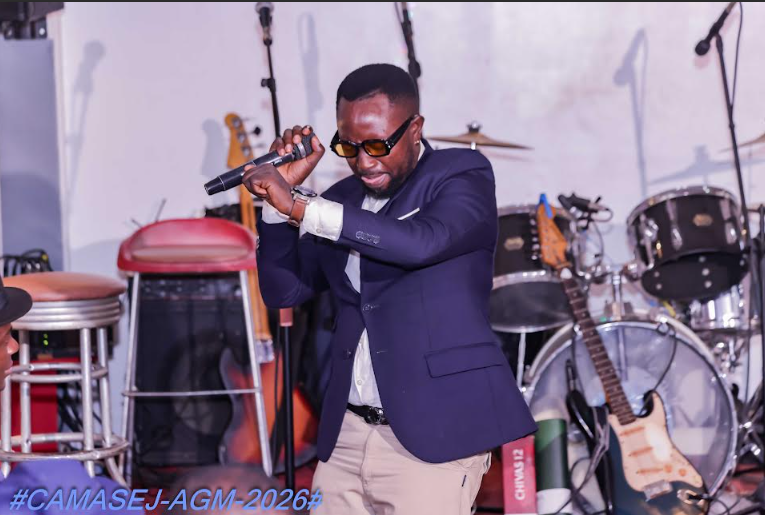
When the Awards ended and journalism truly began
Once the awards were handed out, the microphones rested, and Bacchus was finally released from his earlier house arrest, journalism entered its most practical phase. This was no longer about ethics, but rhythm. Dancing began, and more booze flowed. Or perhaps it was the other way round. History is still verifying. What mattered was that the room loosened, ties became symbolic, and shoes that had endured hours of delayed programming were finally put to proper use.
We also seized the moment to do what journalists do best: hijack a formal event for a personal celebration. Elizabeth’s birthday was declared, adopted, and celebrated without a memo, but with full consensus. And right on cue, President Viban unleashed dance steps that Yaoundé pubs have been witnessing for years but rarely documenting. It was leadership by example.
Then came Sone Bayen. Or rather, the Manyemen ghost he summoned to interrupt the music, telling anyone who cared to hear that Elizabeth is from the same Manyemen as he. Once the public service announcement was completed and Manyemen identity affirmed, the dance elevated. Luckily, he did not use the moment to discuss who truly is the traditional ruler of the land.
Moments later, he struck again, this time calling Amindeh to the dance floor. Unfortunately, several reporters were already operating on reduced sobriety and misheard the call as Aminateh. The hall erupted in joyful confusion, until they realised their error. But it did not matter. They just wanted to shout and make merry. The lights had turned blue and red and the vibe was going mad like it was a Jovi or Maahlox music video.
Even Mbaku did not hesitate to abandon pious composure and launch into steps that were more mischief than Molyko dance floors had ever seen before. On that Limbe dance floor, hierarchy ceased to exist: presidents (past, present and future), MCs, reporters, and even a the few buttoned-up publishers present moved as equals, swept up in rhythm and abandon.
Adding his own flair, Dr. Yumo brought style and rhythm that only a journalism lecturer could muster. At moments, he seemed in a motion competition with the backup dancers of Petit Pays in his magical hit Eboki, and for a second, Limbe felt like it had been transported to a full-blown music video set, with improvisation as choreography.
By this point, the blue hostesses had vanished, either retired home or quietly blended into the crowd. I, for my part, was busy acting as wingman for Smoke who was ensuring the beers never stopped flowing and that the night retained just the right level of chaos.
Limbe pollinated
As the night deepened, unconfirmed but consistent reports began to filter in that some journalists had migrated to other relaxation spots. In the spirit of Wole Soyinka’s Brother Jero, who knows that the show continues even after the preacher leaves the pulpit, journalists drifted to other spots and Limbe, we are told, was successfully pollinated. No further details were provided, and none are required in a profession that respects sources.
Toward the tail end of the event, some journos quietly slipped away. We choose to believe, generously, that they were retiring early to rest ahead of the long drive back home the following morning, and not because of other nocturnal entanglements that might cause Limbe to remember them nine months from now.
Naturally, not everyone left. Some stayed well into the next morning. And then past it. At that point, one had to ask if it was an AGM or it had morphed into the inaugural edition of the CAMSEJ a residency programme. Was it a field operation or a research fellowship in leisure studies?
The AGM, awards, afterparty, recovery, everything merged into one long reminder that journalists, for all our debates about ethics and unity, are remarkably consistent when it comes to celebration. We may disagree, fragment, and start meetings late. But give us music, movement, and a reason, and we will always file that nocturnal story properly. Everyone and their girlfriend knows this fact.
Every gathering of this nature attracts a wide range of expectations, some hopeful, some cautious, others shaped by long memories of how such meetings have gone before. What this AGM demonstrated, however, is that it is possible to do things differently, even within familiar constraints. Not perfectly, but deliberately. And in environments like ours, intention already counts for something.
To Viban and his team, it is only fair to acknowledge that the bar was raised in standards, in coordination, and yes, eventually in alcohol levels. Decisions were made that reduced tension, created space, and allowed the event to breathe. That is no small feat in a profession where disagreement is the way of life. By setting a higher benchmark, you have shown what is possible when leadership chooses restraint first and release later.
But with higher standards comes a quieter, heavier obligation: consistency. History has a curious way of being unforgiving, not to those who try and stumble at the bottom, but to those who climb high and then lose their footing. It remembers declines more sharply than ascents, and expectations, once raised, do not easily return to their former height.
The work ahead, therefore, is not about surpassing this moment, but sustaining it. Because once people have seen what can be done, the room for excuses narrows. And the measure of this leadership will not rest solely in one AGM well handled, but in how steadily the standard is carried forward long after the music fades and the bar closes.
By the end, tired but reflective, one line lingered with me, borrowed from Viban, and perhaps unintentionally, the most honest summary of the night: “Cancel my idea, but make a proposal.” Because that’s where we are: full of criticism but short on patience.
Gi Yo
Such a great piece. Thanks for walking me through the night, Gi Yo.
Thank you, Larry. We are glad you enjoyed the piece
What a beautiful narration. I enthusiastically read all through till the end